
Choosing between a DIY website and a custom design depends on your stage, budget, and goals. Here’s how to make the right call for your small business.
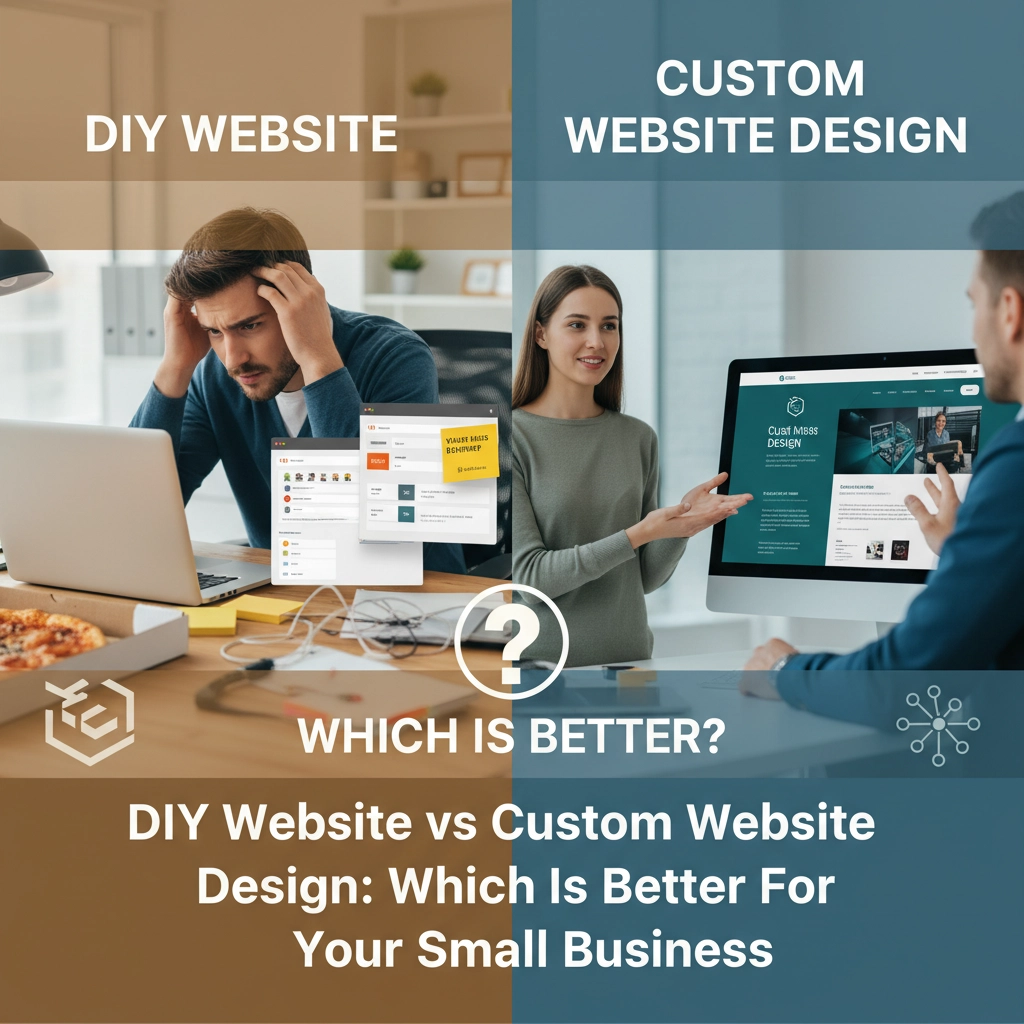
Website design is a big call for any small business. If you’re running lean and need something live yesterday, DIY website builders can be a lifesaver. If you’re ready to scale, need advanced features, or want a site that feels unmistakably yours, custom website design is worth the investment. Let’s break it down so you can choose with confidence.
DIY Website Design: Fast, Affordable, But Limited
DIY builders like Wix, Squarespace, Shopify, and WordPress.com make getting online incredibly easy. Drag, drop, publish—no coding required. Prefer open-source flexibility? Explore WordPress.org.
The Upsides
Affordable
Expect $10–$30 per month, with annual plans under $100. Perfect for startups or side hustles counting every dollar.
Quick Launch
You can go from idea to live site in hours, not weeks—ideal when you’re ready to start booking clients or taking orders.
No Code, No Problem
Visual builders mean what you see is what visitors get.
Full Control
Update copy, add pages, and tweak visuals whenever you want—no waiting on a developer.

The Downsides
Generic Templates
Even with custom colors and images, many DIY sites look alike.
Feature Limits
Complex needs—like custom booking flows, memberships, or CRM integrations—often hit platform walls.
SEO Gaps
DIY tools handle the basics but can’t replace active optimization. Start with Google’s SEO Starter Guide and Moz’s Beginner’s Guide to SEO.
Design Risks
Without a designer’s eye, it’s easy to end up with a “homemade” feel that undercuts credibility.
Custom Website Design: Professional, Scalable, But Pricier
Custom sites are crafted by professionals to match your brand exactly—like hiring an architect instead of buying a model home. If that’s your path, explore our Website Design Services.
The Advantages
Tailored Branding
Every pixel and phrase fits your identity, creating a one-of-a-kind experience.
Advanced Functionality
Bookings, portals, e-commerce logic, CRM connections—if you can describe it, it can be built.
Optimized for SEO and Speed
Clean code, fast load times, and mobile optimization come standard. Need ongoing support? Our SEO Optimization keeps results compounding.
Built to Scale
A custom foundation grows with your business—you won’t outgrow it next year.

The Drawbacks
Higher Cost
Expect starting prices around $1,500, often $5,000+ for small businesses.
Longer Timeline
Projects usually take 3–8 weeks.
Less Instant Control
Changes often go through your developer—great for polish, less ideal for quick edits.
DIY vs Custom: Quick Comparison
| Feature | DIY Website | Custom Website |
|---|---|---|
| Upfront Cost | $100–$360/year | $1,500–$10,000+ |
| Launch Time | Hours–Days | 3–8 Weeks |
| Design Uniqueness | Template-based | 100% Custom |
| Advanced Features | Limited | Fully Flexible |
| SEO Strength | Basic | Built-In Optimization |
| Mobile Experience | Template-Dependent | Professionally Tuned |
| Scalability | Can Feel Tight | Grows With You |
| Professional Look | Varies | Always Polished |
| Ongoing Support | DIY | Developer Partnership |
When DIY Makes Perfect Sense
Choose DIY if you’re:
- Launching a new idea or side hustle
- On a tight budget (<$500)
- Comfortable learning new tools
- Running something simple (freelancer, consultant, local service)
- Okay with templates and basic SEO
Great fit for: freelancers, local shops, early-stage founders. Compare options in our WordPress vs Wix for Small Business guide.

When Custom Design Is Worth It
Invest in custom if you:
- Need advanced features like bookings, memberships, or e-commerce
- Serve premium clients who expect a refined experience
- Have defined brand standards or visual identity
- Want strong SEO and long-term scalability
- Prefer to delegate and focus on growth
Best for: established businesses, professional services, B2B, or anyone treating their website as a revenue asset.
The Hybrid Approach
Many businesses start with DIY, then upgrade once growth demands it. Others mix both—DIY for microsites or campaigns, custom for the main brand.
A “custom-lite” route—working with a designer to enhance a WordPress or Squarespace base—can also strike a smart balance of cost and control. Learn more in our Custom-Lite WordPress Themes guide.
Making the Right Decision
Stage:
Starting up? DIY works. Growing fast? Go custom.
Budget:
Under $500? DIY. Able to invest $5k+? Custom pays dividends.
Time & Skills:
Love tinkering? DIY. Prefer to stay focused on business? Go custom.
The Bottom Line
Both paths can be right—it’s about fit, not ego. A simple site live today beats a perfect one “coming soon.”
Whichever route you choose, prioritize clarity, usability, and customer experience. Keep your message simple and your next step obvious.
Ready to decide? Talk With City Grove Media. Whether you start DIY or invest in custom, we’ll help you design a site that performs.
